
Article · SwissTechNova
Sustainable Architecture in Zurich: How Energy Efficiency and Smart Design Add Value to Every Build
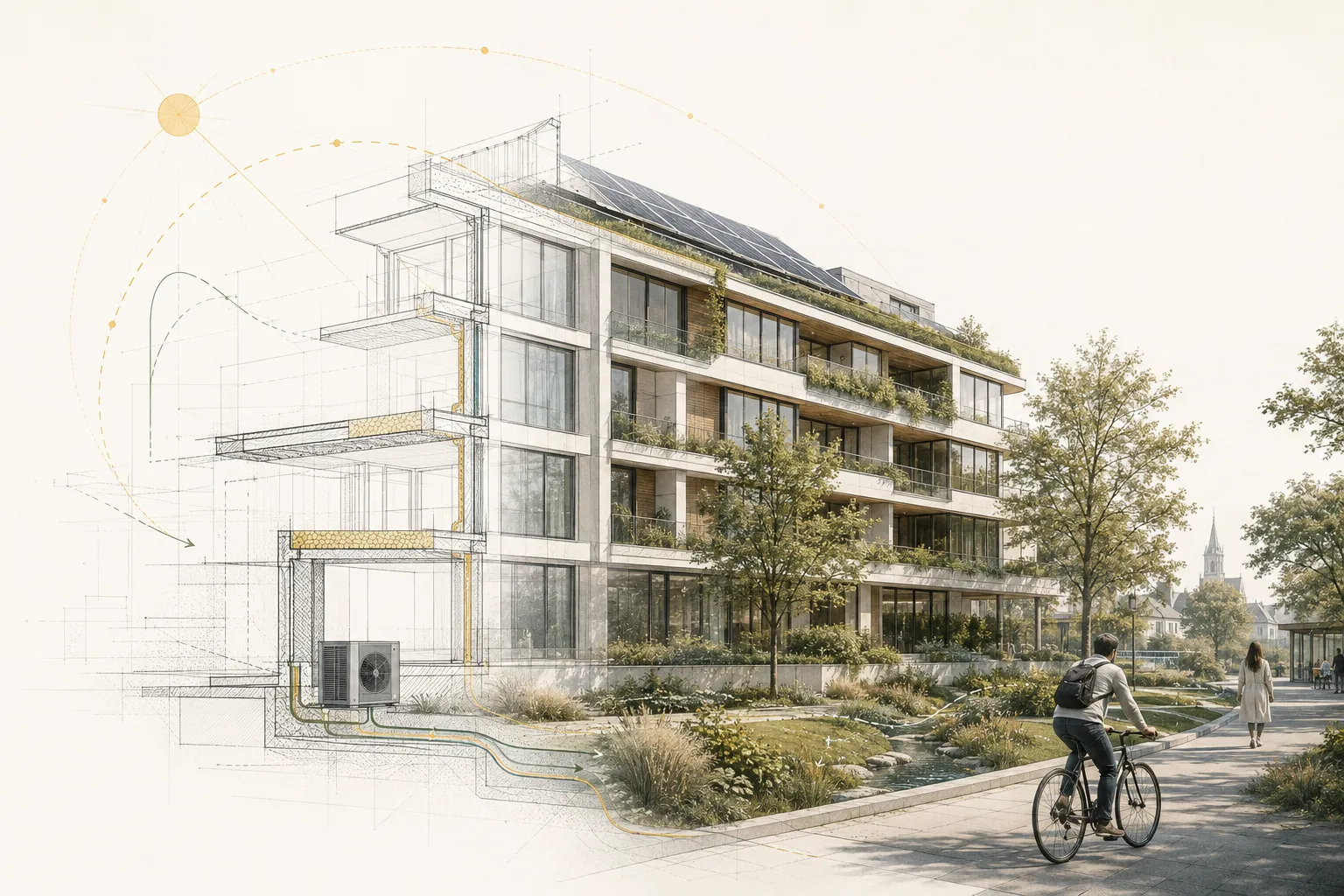
Sustainable architecture in Zurich is no longer a niche ambition — it is the benchmark that forward-thinking property owners, planners, and investors now measure every project against. By integrating energy efficiency, responsible material choices, and smart design principles from the very beginning of a build or renovation, owners in the Zurich area can reduce operating costs, increase property values, and future-proof their assets against tightening Swiss energy regulations.
Why Energy Efficiency Matters for Zurich Property Owners
Switzerland has set legally binding targets to reach net-zero greenhouse gas emissions by 2050, and the building sector accounts for roughly 40% of national energy consumption. In practical terms, this means that properties failing to meet evolving efficiency standards face stricter regulations, higher running costs, and — critically — a shrinking pool of buyers or tenants willing to accept them at full market value.
Zurich's dense urban fabric, cold winters, and premium land prices make the case for efficiency even stronger. A well-insulated envelope, intelligent heating and cooling systems, and optimised window placement all reduce energy demand year-round. The result is measurable: lower utility bills, smaller carbon footprints, and buildings that retain — and grow — their value over time.
Smart Design Principles That Deliver Long-Term Value
Energy efficiency does not start with technology — it starts with design decisions made on the drawing board. Orientation, massing, and window-to-wall ratios determine how much free solar heat and daylight a building captures. Compact forms minimise heat-loss surface areas. Thoughtful cross-ventilation can reduce the need for mechanical cooling entirely.
For new builds, this means working with architects who integrate passive design strategies from day one. For renovations, it means auditing the existing structure first — understanding where heat escapes, where moisture accumulates, and which upgrades will deliver the highest return on investment before specifying a single product.
At SwissTechNova's architecture practice, feasibility and site analysis are built into the early project phase precisely to identify these opportunities before budgets are committed.
Sustainable Materials: Quality That Pays for Itself
Material selection sits at the intersection of environmental responsibility and financial prudence. Locally sourced timber, recycled concrete aggregates, high-performance triple glazing, and mineral insulation products all reduce embodied carbon — the emissions locked into a building's fabric from the moment it is constructed. They also tend to be more durable, requiring less maintenance over a building's lifetime.
Swiss construction culture has long prized quality over short-term cost savings, and sustainable materials align perfectly with that tradition. Specifying products with verified environmental declarations (EPDs) also makes it easier to certify a building under recognised standards such as Minergie, Switzerland's leading energy-efficiency label for buildings, which can further enhance resale value and access to preferential mortgage rates.
Renovations: The Swiss Tax Incentive Window You Should Not Miss
For existing property owners, there has rarely been a better moment to act. Switzerland's current tax conditions allow renovation costs that improve energy performance to be deducted from taxable income — a significant financial lever that is set to change from 2029. Planning and executing a renovation now means capturing those deductions while locking in long-term efficiency gains.
This is not simply about compliance; it is about strategy. A renovation that upgrades insulation, replaces an ageing oil or gas boiler with a heat pump, and installs photovoltaic panels can transform an energy-intensive property into a Minergie-level asset. The payback period, when tax incentives are factored in alongside reduced energy bills, is often far shorter than owners expect.
Understanding project complexity and risk is essential at this stage. SwissTechNova's engineering and project management capabilities exist specifically to guide owners through these multi-system upgrades with confidence — from initial concept through to delivery and validation.
Official Swiss Resources for Energy Efficiency and Sustainability
Switzerland gives property owners a well-coordinated network of federal and cantonal programmes for energy-efficient, sustainable building. We work alongside these central platforms on our projects and recommend them as authoritative starting points:
- EnergieSchweiz — the Swiss Confederation's national programme for energy efficiency and renewable energy, offering practical guidance, tools and independent advice for owners and builders.
- Energieförderung Kanton Zürich — the Canton of Zurich's funding programme, with subsidies for building-envelope insulation, renewable heating and energy-efficient renovation across the region.
- KBOB – Nachhaltiges Bauen — the federal construction coordination body's reference for sustainable building, including the life-cycle and ecological material data used as a benchmark on Swiss projects.
- Das Gebäudeprogramm — the joint federal and cantonal buildings programme funding insulation and heating-system replacement; in Zurich it is the channel through which many renovation subsidies are administered.
Used together, these platforms help owners confirm eligibility, secure funding and hold their projects to recognised Swiss standards — the same foundations we build on at SwissTechNova.
Socially Responsible Design: Beyond the Building Itself
Sustainable architecture in a city like Zurich extends beyond individual buildings. Thoughtful design considers the broader neighbourhood: how a building relates to streetscapes, how it manages stormwater, whether it provides green spaces or biodiversity corridors, and how it serves its occupants' long-term wellbeing. These are not soft concerns — they are increasingly reflected in planning permissions and ESG-linked investment criteria.
Interior environments also matter. Access to daylight, acoustic comfort, air quality, and adaptable layouts all contribute to occupant health and satisfaction — factors that translate directly into lower vacancy rates for commercial properties and higher livability ratings for residential ones. SwissTechNova's architecture and interior design discipline addresses these dimensions together, ensuring that the inside of a building is as carefully considered as its structure and systems.
Key Takeaways
- Energy efficiency is a financial asset, not just an environmental obligation — it reduces running costs, supports property values, and aligns with Swiss regulatory direction toward 2050 net-zero targets.
- Passive design decisions made early — orientation, form, glazing — have the greatest long-term impact on a building's energy performance and should be integrated from the first design stage.
- Sustainable material choices reduce embodied carbon and maintenance costs, and support certification under standards like Minergie that enhance market value.
- Swiss tax incentives for energy renovations are available until 2029 — acting now allows property owners to combine financial benefits with long-term efficiency gains.
- Socially responsible design — considering wellbeing, biodiversity, and community impact — is increasingly tied to planning approvals and investment attractiveness in Zurich.
Whether you are planning a new build, considering a renovation, or exploring the potential of an existing site, the principles of sustainable, energy-efficient architecture are the surest path to long-term value. Book a free consultation with SwissTechNova to discuss how these principles can be applied to your specific project in the Zurich area.